If you’ve come across DHgate while searching for affordable suppliers, you’ve probably asked yourself, is DHgate legit? The prices look appealing, but once you start reading reviews, things get confusing. Some buyers say they received exactly what they ordered, while others mention poor quality, delayed shipments, or problems getting refunds.
In this guide, we’ll break down how DHgate works, the most common issues buyers run into, and what you can do to reduce risk so you can decide whether it’s a practical option for testing products or something you’re better off skipping.
What Is DHgate?
To answer “Is DHgate legit?”, you first need to understand what the platform actually is and how it works behind the scenes.
DHgate is an online marketplace that connects buyers around the world with sellers—most of them based in China. It’s been around since 2004 and offers a wide range of products, including electronics, clothing, accessories, and home goods, often at lower prices than you’ll see on other platforms.
One reason DHgate attracts so many buyers is its low minimum order quantities. In many cases, you can order just one item or a small batch, even for products that are usually sold in bulk. This makes the platform appealing to small resellers and brands that want to test products without committing to large orders.
How Does It Work?
The buying process is simple. When you place an order, you pay DHgate rather than the seller directly. The platform holds your payment while the seller ships the item, then releases it once the order is marked complete. This system is designed to add a layer of protection for buyers.
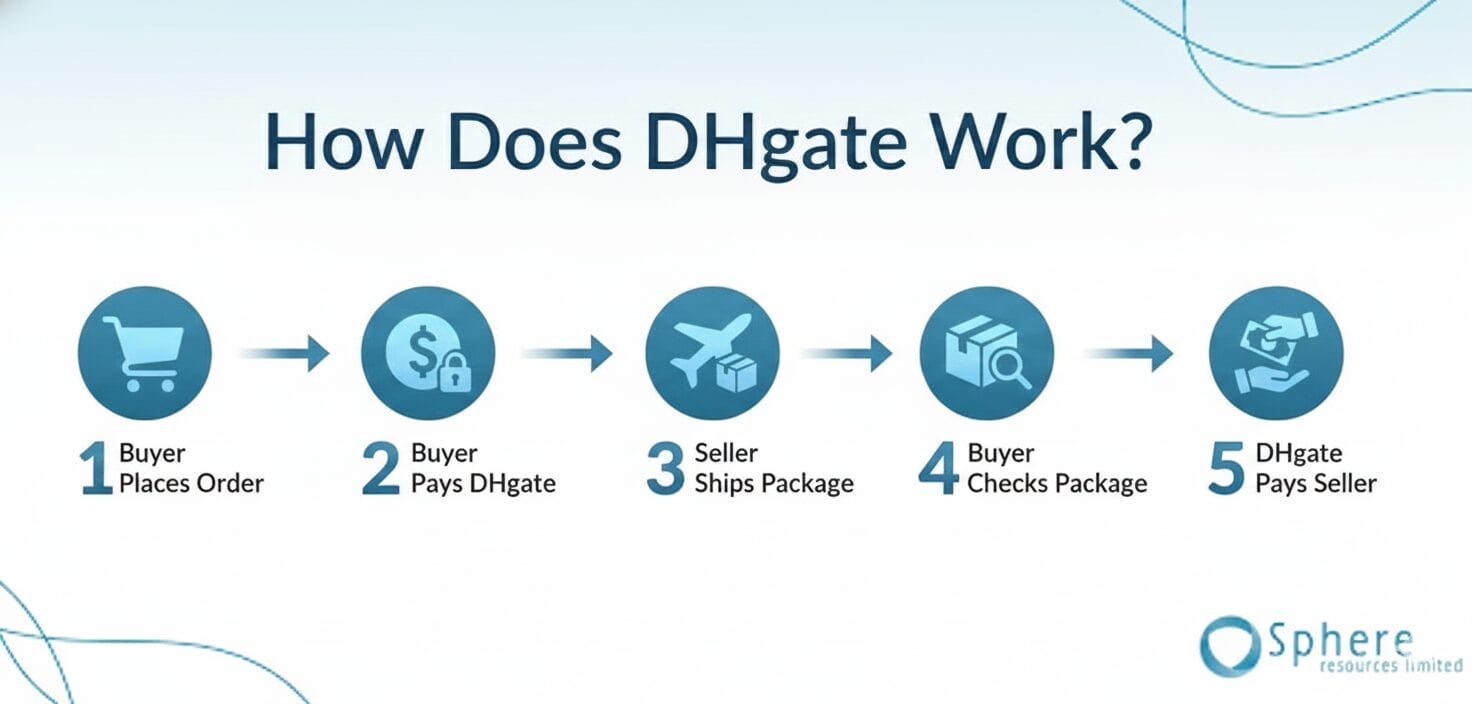
However, it’s important to understand that DHgate is only the marketplace. It doesn’t manufacture products or handle packaging and shipping.
Each seller operates independently, with their own quality standards, product accuracy, and service levels. Because of this, the real question isn’t simply is DHgate legit? It’s which sellers on DHgate you can trust with your order.
Why DHgate Is Cheap?
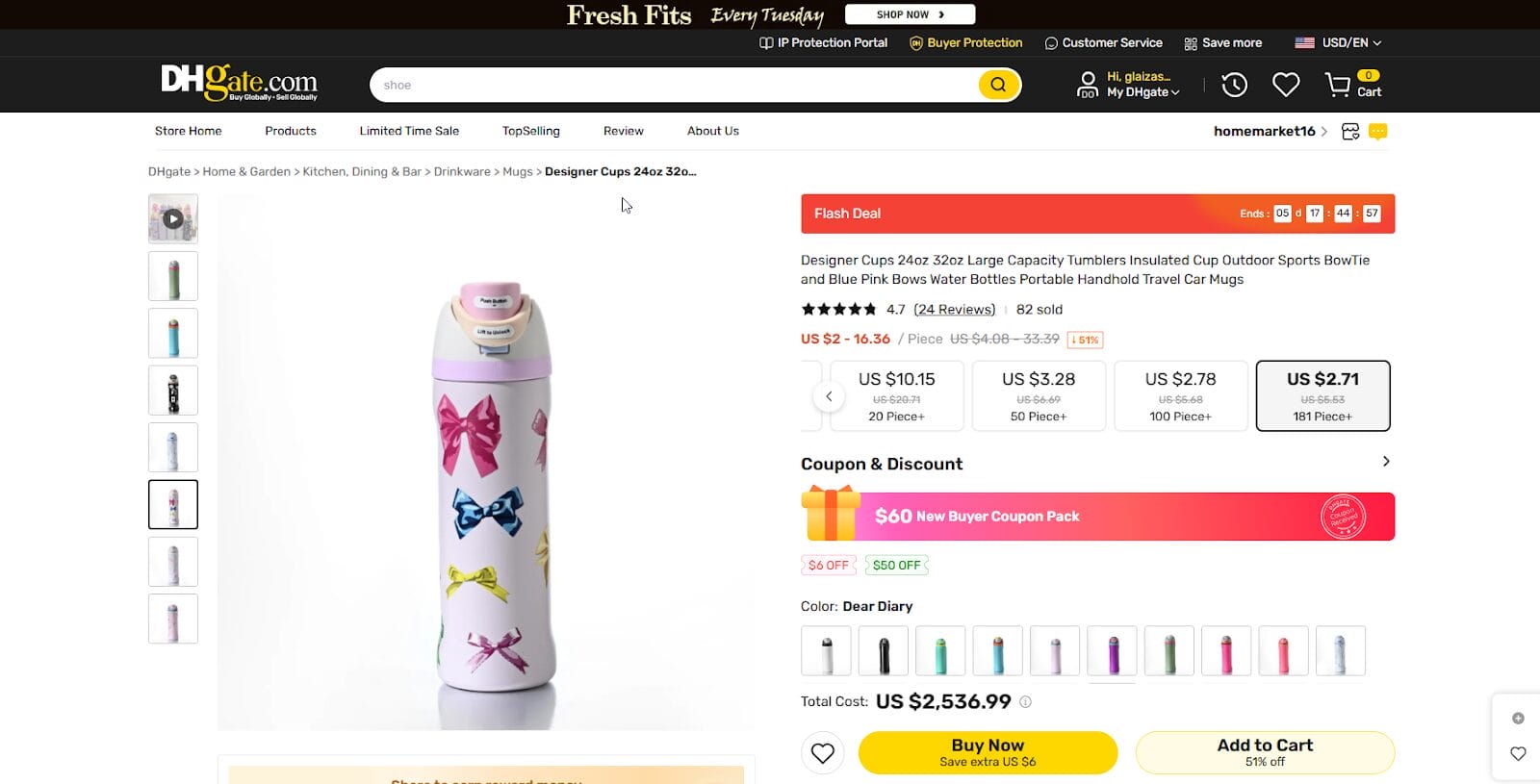
One of the main reasons DHgate prices are low is that many sellers are Chinese manufacturers or wholesalers selling directly from their own factories and warehouses. They don’t rely on physical stores, sales staff, or large marketing budgets, which helps keep overhead costs down.
These sellers also focus on volume. Pricing is often closer to wholesale, meaning the more units you buy, the lower the cost per piece—even for simple products like tumblers or small home gadgets.
On top of that, DHgate sets rules around “unreasonable” pricing to keep listings competitive across the platform.
Why is DHgate Considered a Scam?
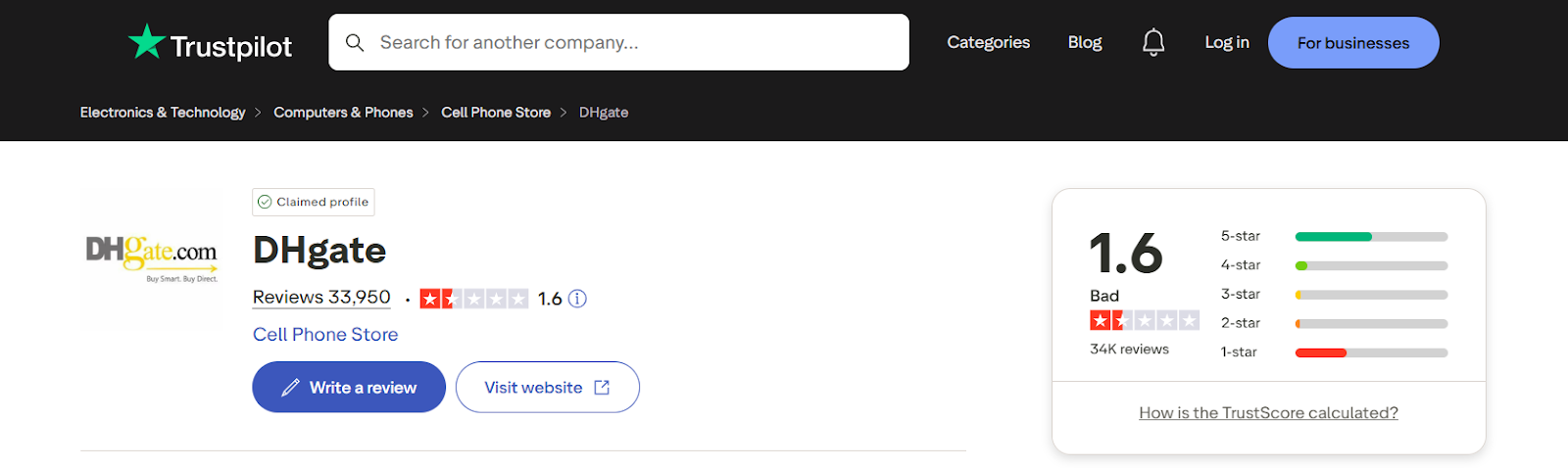
When people ask is DHgate legit or a scam? They’re usually reacting to real problems shared in reviews and forums, not just rumours. On Trustpilot, DHgate has a 1.6 out of 5 rating from 33,917 reviews, and on Sitejabber, it’s about 2.7 out of 5 from roughly 6,946 reviews.
Below are the most common issues buyers run into on DHgate and what you can do to reduce the risk if you decide to test the platform.
1. Long Shipping Delays and Missing Packages
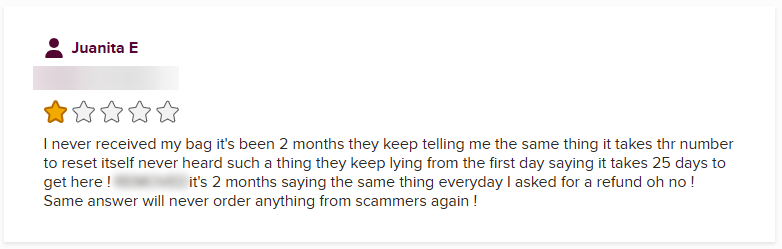
Shipping is one of the main reasons buyers wonder if DHgate is legit for international orders. Many buyers say their order either never arrives or takes much longer than expected, especially when sellers use cheap economy shipping from China.
These free or low-cost methods can stretch delivery to several weeks and increase the chance of delays, customs holdups, or lost packages. Most sellers include free shipping by default using the slowest options, which keeps the price low but adds risk on timing.
To lower the risk, order well before any launch or deadline and pick a shipping method that matches how urgent and valuable the order is:
- Economy / Standard post (China Post and similar): often free, but delivery can take around 4–6 weeks or longer.
- ePacket or “Special Line” services: common for parcels under 2 kg, usually around 2–3 weeks with more reliable tracking.
- Express (DHL, FedEx, UPS, EMS, TNT): best for urgent or higher-value orders, often 3–10 days, but can cost more than the product on small orders.
Whatever you choose, watch the tracking closely. If it stops updating or shows a wrong location, contact the seller through DHgate early instead of waiting until your 90 days protection period is almost over. Also, using a shipment tracking system can help you spot shipping problems early.
2. Products That Don’t Match the Listing Photos or Description
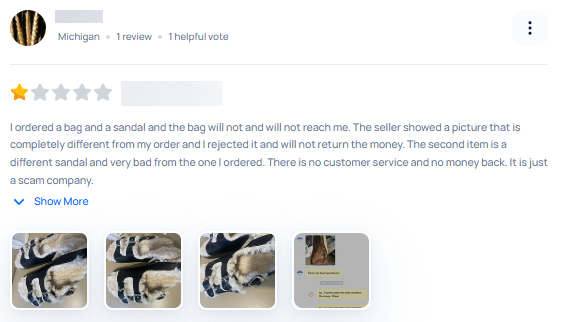
A lot of buyers report that what arrives doesn’t fully match the listing, raising doubts about whether DHgate is legit. Different colours, cheaper materials, missing parts, or a design that looks much rougher than the photos. This shows up across many categories, from clothing and accessories to small electronics and home products, and is one of the main reasons people walk away feeling like they were misled.
Before you place a bigger order, ask the seller for real photos or short videos of the actual item, confirm key specs (sizes, materials, logos, packaging), and start with a small test order to check everything yourself.
3. Counterfeit and Low-Quality Product Copies
Many DHgate complaints are not just about wrong items, but about products that feel cheap or are obvious copies of luxury items or well-known brands. This is especially common in categories like sneakers, fashion, accessories, and “designer-style” goods. These listings use branded photos but the item that arrives is an unlicensed replica or a much lower-grade version.
For a growing brand, this creates two problems: customers can lose trust when something feels fake or flimsy, and you can run into issues if customs or marketplaces flag your stock as counterfeit.
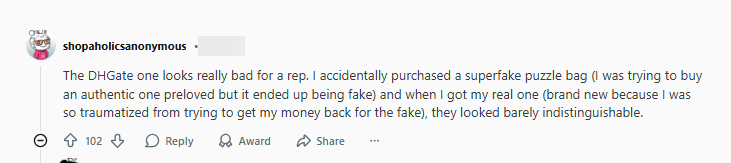
To reduce this risk, avoid listings that use brand names, logos, or luxury photos unless you have written proof of authorization, and focus instead on unbranded products.
4. Poor Communication and Slow Replies from Sellers
Many buyers say the biggest problem is getting clear answers from sellers when something goes wrong. Some sellers stop replying, give very short responses, or reply only after several hours.
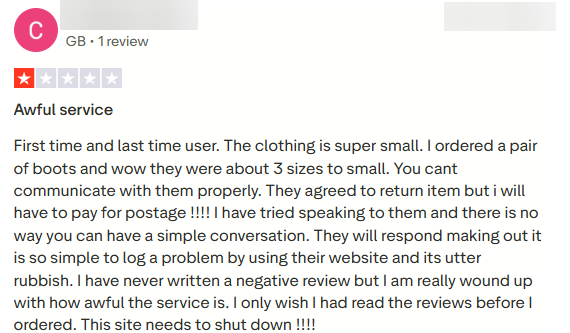
This often happens because many sellers are based in China and work in a different time zone. On top of that, many DHgate stores are run by very small teams or even just one person who handles everything.
5. Fake or Misleading Reviews
Many buyers and bloggers warn that DHgate reviews can be hard to trust, making it harder to judge if DHgate is legit based on ratings alone. You’ll often see one-line comments like “good product,” repeated phrases, or photos that look like they were uploaded by the seller, not by real customers.
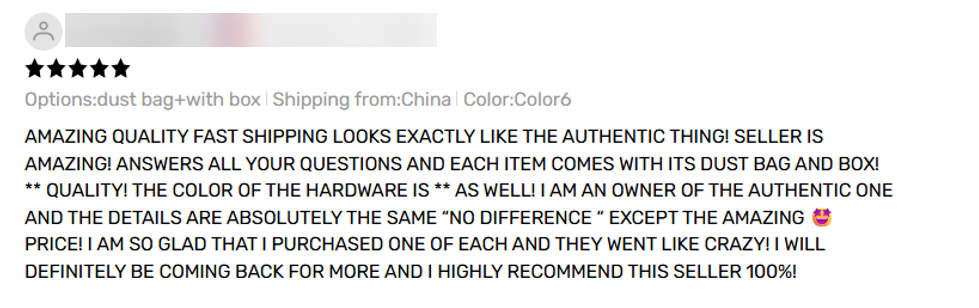
Don’t rely on star ratings alone. Go to the reviews with photos, read the 1–3 star comments, and pay close attention to bad reviews where customers share specific problems with quality, sizing, or shipping and include clear images.
If most reviews are vague, copied, or don’t show the actual product, consider it higher risk and either skip it or only place a very small test order.
6. Problems with Refunds and Buyer Protection Claims
DHgate has a buyer protection and dispute system, but many buyers describe it as slow or confusing. Some disputes also end in partial refunds. This can happen if DHgate approves only part of the claim, or if the final refund amount is reduced by coupons, bank fees, or exchange rate changes.
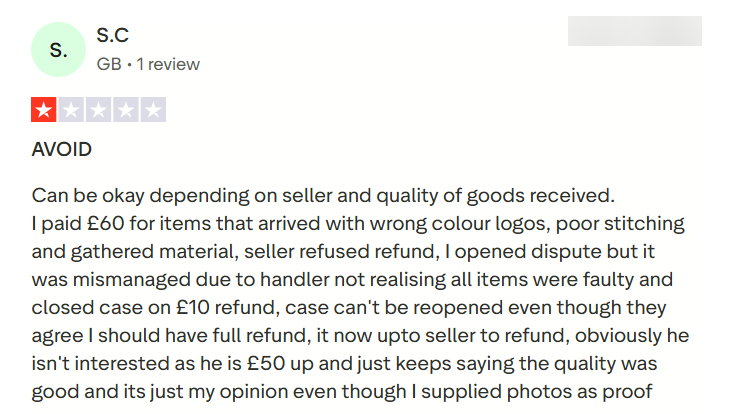
If an issue isn’t resolved with the seller, you can open a dispute from the order page. DHgate’s dispute guidance says you can open a dispute 8 calendar days after shipment. After confirming receipt, the dispute window is 30 calendar days for regular buyers and 60 calendar days for VIP buyers, and some special categories may have shorter deadlines.
Once a dispute is open, the buyer and seller have a set period to agree that shows in the dispute page. If it isn’t resolved, the dispute can be escalated to DHgate’s resolution team (either by you or automatically if you can’t agree within the timeframe).
Wondering how long it will take to get your money back? Check the table below.
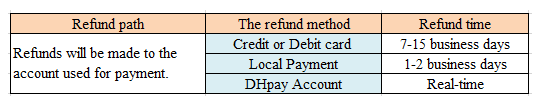
When to Open a Dispute on DHgate
Most serious issues on DHgate fall into two main dispute types.
- Item Not Received – package never arrives, tracking stops for a long time, or shows “delivered” but nothing reached you.
- Item Significantly Not as Described – product is clearly different from the listing (wrong item, missing pieces, very different material or colour, major defects, or much lower quantity).

What to do before and during a dispute:
- Contact the seller through the order page and give them a chance to fix the problem.
- If the order never arrives, arrives badly damaged, or clearly isn’t as described, gather proof (screenshots, photos, unboxing video) and open a dispute before your protection period ends.
- For higher-value items, you may be asked to return the product before a refund is approved.
- For low-value goods, it often makes more sense to push for a partial refund or a replacement, since return shipping can cost more than the product itself.
For more details on what DHgate accepts as proof for each dispute type, check here.
How to Buy from DHgate Safely
If you still ask yourself, “Is DHgate legit?” after reading reviews, this checklist will help you avoid the most common red flags.
Check the Seller Profile and Product Reviews
The seller’s profile and their reviews with buyers photo is your first quick check before you trust them with an order. It can help you avoid the riskiest stores.
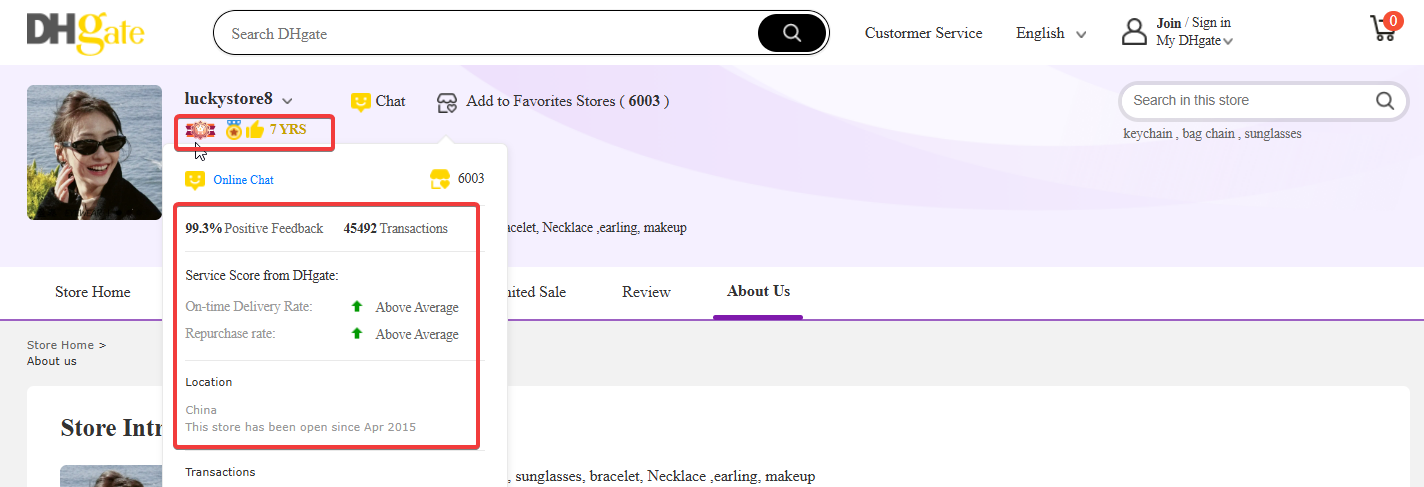
Here’s what to look for in their profile:
- Active for at least 2 years, with 95%+ positive feedback and 100+ completed orders
- Badges like “Sponsored Supplier”, “Above Industry Standards”, or at least IV/V performance tier
- A catalog focused on one or a few related categories, not a random mix of unrelated products
If the store looks new, has very few products, or feels messy and random, treat it as high risk.
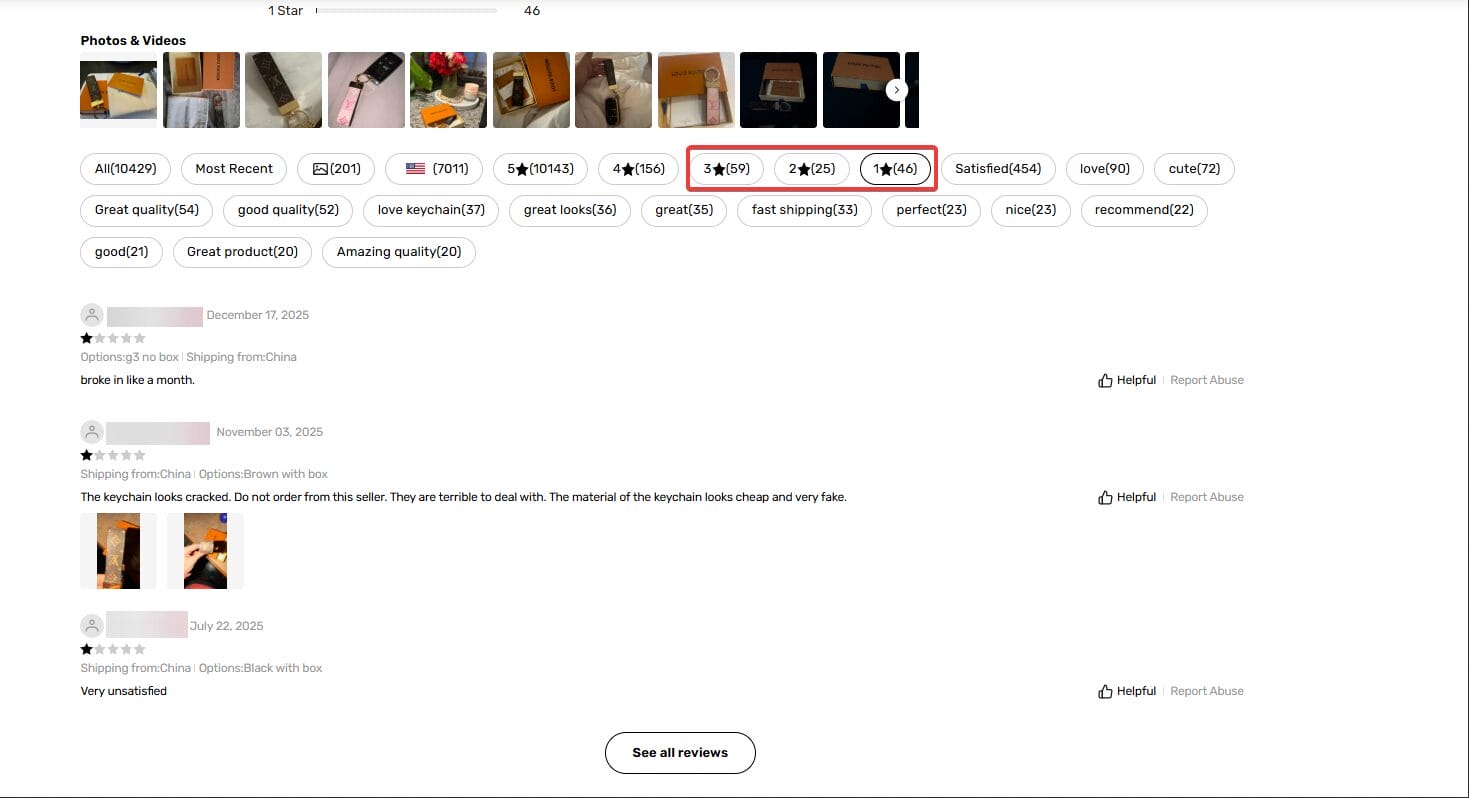
Here’s how to use the reviews well:
- Check recent reviews from the last 3–6 months.
- Read 1–3 star comments first – this is where people usually explain what went wrong.
- Look for buyer photos or videos that show the real product, packaging, and any defects
- Notice if unhappy buyers mention the same issue more than once (for example, “size runs small,” “very thin material,” or “shipping took 2 months”).
- Be careful with pages that have no real reviews or only short, similar comments like “good seller” or “great product” with no detail.
When you’re unsure about a product, reviews are one of the best ways to check real quality before you spend money. They show how the item looks in real life, how it was packed, and how the seller handled any problems.
Watch for Pricing Red Flags
Price is a good early warning sign. If a deal looks too good, there’s usually a reason. Use price to check for risk, not just to find the cheapest option.
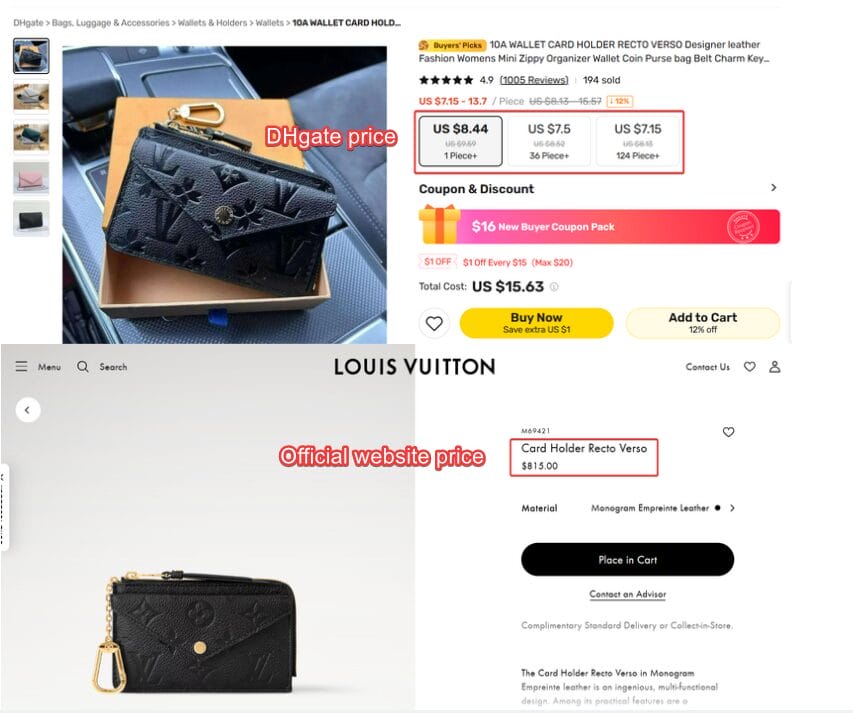
Here’s what to do:
- Compare the price with similar listings on DHgate and on other platforms.
- Be very careful with big brands or “luxury-style” products sold at a small fraction of normal retail – these are often replicas or counterfeit.
- Check the final price at checkout, including shipping and any “handling” or extra fees.
- If the total price is far below other similar offers, assume there is higher risk on quality, delivery, or authenticity.
Start With a Small Test Order First
Instead of jumping straight into a big order, start with the smallest quantity the seller allows. Use that first shipment to check how they handle quality, packing, and timing. If the test order goes well, you can slowly increase quantities.
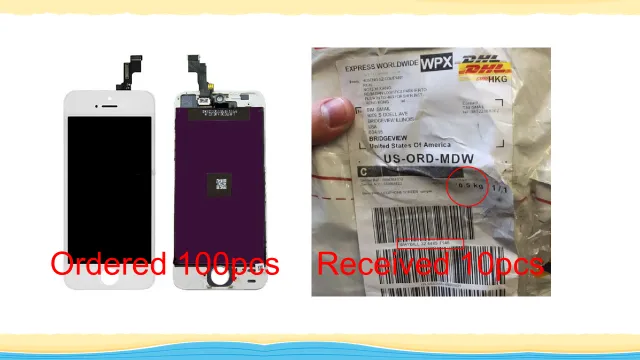
Here’s what to do:
- Order the minimum quantity you can, especially for a new seller.
- When it arrives, don’t confirm receipt yet. Open the box, check everything carefully first.
- Check the quantity, quality, function or fit, colours, and packaging against the listing and any promises made in your messages.
- Take photos or a short unboxing video while you inspect the items in case you need proof later.
Avoid Making Payment and Communication Outside DHgate
If you pay or chat outside DHgate, you lose escrow, refund support, and a clear record of what was agreed. In most cases, DHgate will not step in if the payment happens off the platform.
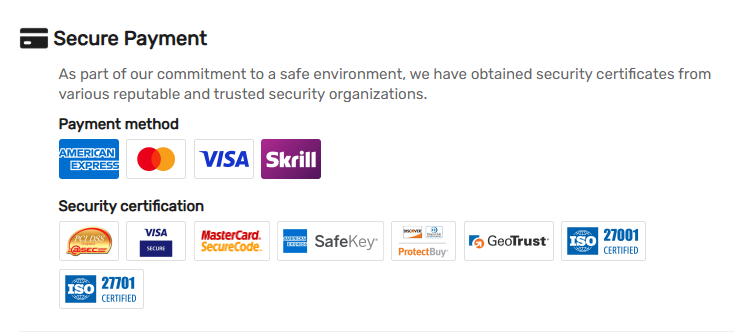
Here’s how to stay safer:
- Pay inside DHgate only so your order is covered by their buyer protection system.
- Never send money directly to the seller. Avoid bank transfers, Western Union, or payment links sent in chat.
- Keep all messages on DHgate. Ask questions, share files, and discuss issues through the order page so everything is recorded if you need to open a dispute later.
- Use supported methods like credit or debit cards. DHgate accepts major cards such as Visa, MasterCard, American Express, Discover, and UnionPay, plus some local methods depending on your country.
If a seller pushes you to pay outside DHgate “to save fees” or “get a better price,” treat that as a red flag.
DHgate Supported Payment Method
DHgate supports several payment methods, and the options will depend on your country or region. You can check the table below for the full list of supported methods and limits in each location.
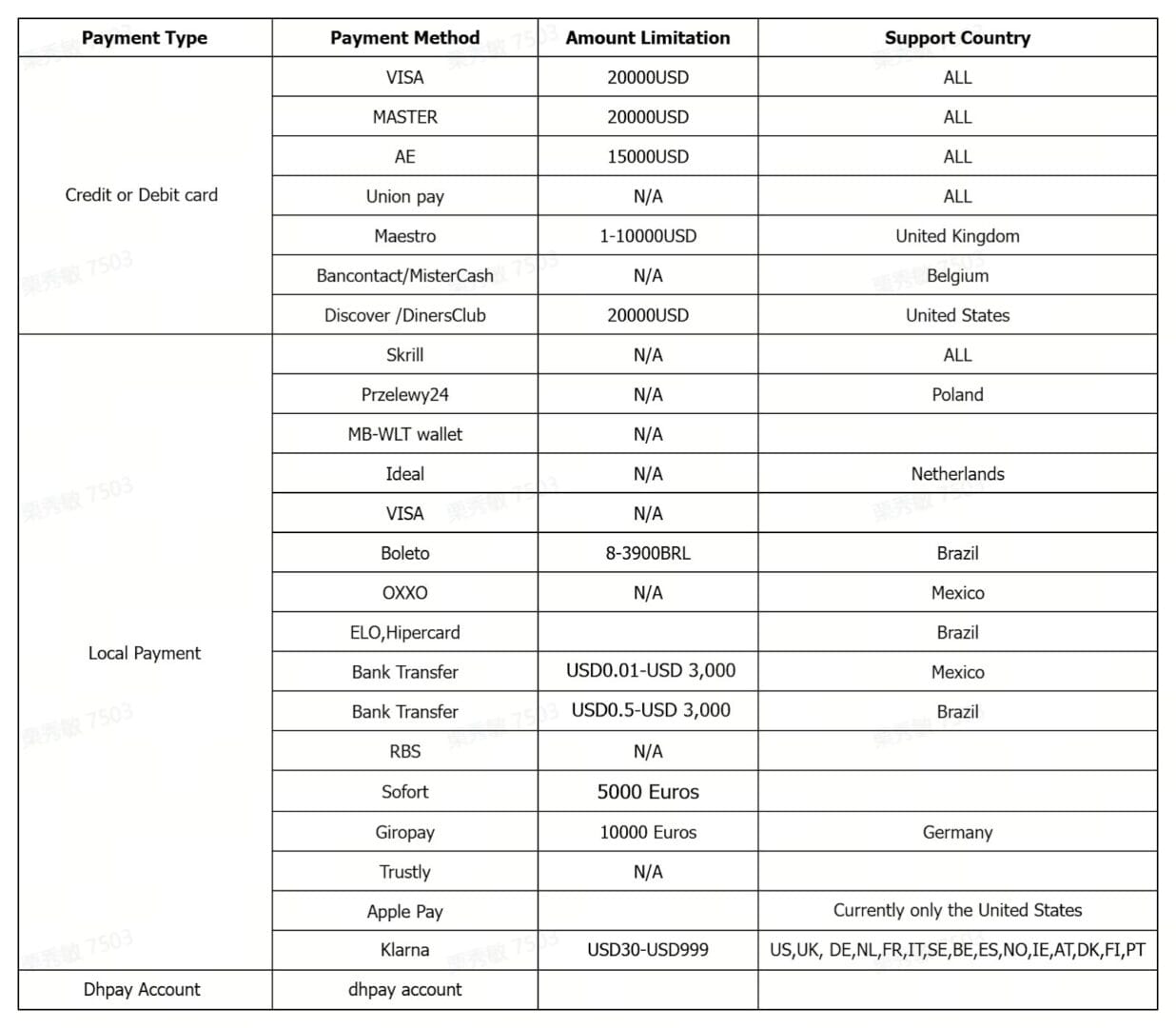
Whatever method you use, always pay through DHgate’s checkout, not by sending money directly to a seller, because off-platform payments are not covered by DHgate’s protection.
DHgate vs Other Marketplaces
DHgate isn’t the only option. Here’s how it compares with a few other popular marketplaces so you can see where it fits in your sourcing strategy.
| Feature | DHgate | Alibaba | AliExpress | 1688 |
| Typical Buyer | Global bargain hunters, small resellers | Global B2B buyers, importers, sourcing teams | Consumers and very small online sellers | Chinese domestic buyers and traders |
| Typical Order Size | Very small to small test orders | Small to large bulk orders | Single units to small batches | Small to large bulk orders |
| Pricing Level | Very low, often close to wholesale | Negotiated wholesale pricing | Higher than DHgate/1688, more “retail-like” | Often lowest factory/wholesale pricing in China |
| Shipping Speed | Estimate 2–6 weeks. Varies by shipping method and destination. | Depends on supplier and shipping method | Estimate 2–5 weeks (standard shipping). Can be faster or slower by route. | Depends on supplier and freight setup |
| Buyer Protection | Escrow and dispute system, results can vary | Trade assurance and contracts, still need vetting | Platform protection and refunds for consumers | Mainly for China-based buyers, little direct help |
| Best Use for Brands | Low-risk tests on simple, non-core products | Building long-term suppliers for custom products | Testing ideas or buying ready-made small runs | Using an agent to access China-domestic pricing |
This comparison helps if you’re still deciding whether DHgate is legit for your sourcing needs. DHgate works best for very small, test orders on simple products, while Alibaba, AliExpress, and 1688 fit different buyer types and order sizes.
If you’re also considering Alibaba, see our guide on whether Alibaba is legit.
Final Words
If you’re still wondering Is DHgate legit? The short answer is that it can be useful if you understand its limits and know how to manage risk. This guide is meant to help you make safer decisions and avoid common mistakes when using marketplace suppliers.
Sphere Resources is a China-based sourcing agency. We source directly from factories, manage supplier communication, handle shipping and logistics. Contact us if you need support with sourcing from China.